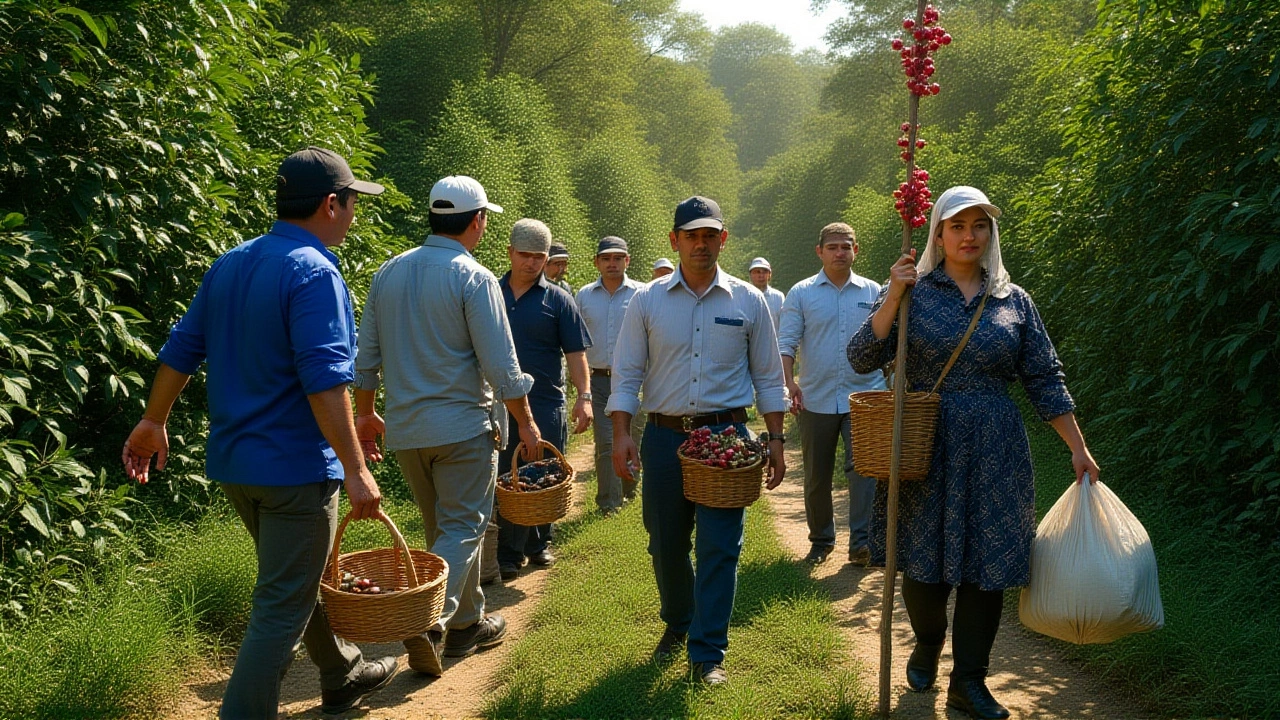
El Salvador is betting big on its El Salvador Coffee Institute to turn the Pacamara coffee variety into the next global sensation—following in the footsteps of Panama’s Gesha. It’s not just about growing better beans; it’s about selling a story. And right now, the story isn’t quite landing. Despite a 25% year-over-year jump in coffee exports to 578,000 sixty-kilogram bags in the 2024/25 marketing year, and projections of 583,000 bags for 2025/26, Salvadoran producers are struggling to make the world notice what makes Pacamara special. The USDA Foreign Agricultural Service confirmed in its May 2025 report that production will rise to 597,000 bags next season, but the real challenge isn’t yield—it’s perception.
Why Pacamara Matters—and Why It’s Being Overlooked
Pacamara, a hybrid of Pacas and Maragogype, is a coffee variety known for its floral, tea-like notes and complex body. It thrives at high altitudes in El Salvador’s volcanic soils. But while Panama turned Gesha into a luxury brand fetching over $1,000 per pound at auction, Pacamara remains largely invisible outside specialty circles. "Sadly, Salvadoran producers have not been able to highlight those differences as effectively as possible," said an unnamed industry expert in Perfect Daily Grind’s March 2023 analysis. That’s not for lack of quality. In fact, SCI (Specialty Coffee Institute)’s Cup of Excellence auctions have repeatedly awarded top scores to Salvadoran Pacamara lots. The problem? They’re often sold as "El Salvador coffee," not as Pacamara—a brand in its own right.The Numbers Behind the Brew
The export figures tell a compelling story. From January to July 2025, El Salvador shipped 476,100 quintals (about 47,610 metric tons) of coffee, generating $138 million—up 42.9% from the same period last year. The average export price hit $289 per quintal, the highest in nearly three years. The United States bought nearly half (47%) of those exports, followed by Belgium (12%), Italy (7%), and Germany (4%). Meanwhile, domestic consumption is expected to grow 2% to 316,000 bags in 2025/26, fueled by improved security and rising tourism. Yet, here’s the twist: over 260,000 bags of soluble coffee are still imported annually—mostly from Mexico and Brazil—because most Salvadorans still drink instant, not artisanal.Who’s Brewing Change?
Change is happening, quietly but meaningfully. The café Alquimia placed 14th in the 2025 World Coffee Bar Competition, a rare international honor for a Salvadoran barista. Local spots like Viva Espresso and The Coffee Cup are drawing crowds with single-origin pour-overs. Even global giants like Starbucks and Juan Valdez are expanding their footprints. And in 2024, NESCAFE announced plans to build a logistics hub in El Salvador to source local beans directly—a signal that multinational buyers are taking notice.Meanwhile, certification is growing: over 230 farms and 34 mills hold Rainforest Alliance certification, and dozens more participate in Starbucks’ C.A.F.E. Practices program. Farmers in these programs earn roughly $50 per hundredweight above the "Contract C" price. For a smallholder with two hectares, that’s life-changing money.

The Roaster’s Secret: How Pacamara Demands More
It’s not just marketing. Pacamara is finicky. "From my own experience roasting Pacamara, you need to drop the temperature slightly before loading the roaster," said Rodrigo, a San Salvador-based roaster cited in Perfect Daily Grind. "Per batch, we also roast 20% less volume than we would with Bourbon at the same altitude." That means higher costs, lower yields per roast, and more skilled labor—two things El Salvador’s coffee sector lacks. Aging trees, erratic rainfall, and labor shortages plague the industry. The 2024/25 harvest suffered heavy berry drop due to torrential rains. The 2025/26 season looks better, but climate volatility remains a looming threat.What’s the Path Forward?
Experts agree: El Salvador must stop selling coffee as a commodity and start selling it as a collectible. The recommendations are clear: exclusive boutique auctions for top Pacamara lots, direct partnerships with third-wave roasters in the U.S. and Europe, and aggressive presence at global events like the 2024 Specialty Coffee Expo in April 2024. The PRF El Salvador industry event in March 2023 at the Salamanca Exhibition Centre was a start—but it needs to be a regular, well-funded platform, not a one-off.There’s also a generational gap. Women and young people remain underrepresented in coffee farming, despite their growing role in processing and retail. "The future of El Salvador’s coffee sector depends on effectively marketing Pacamara and encouraging greater participation from women and younger people," said Maria, an unnamed industry advisor in Perfect Daily Grind. Without that, even the best beans will sit in warehouses.

Why This Isn’t Just About Coffee
Coffee is El Salvador’s fifth-largest export, making up 3.39% of total export value. In a country where remittances dominate the economy, a thriving specialty coffee sector could mean more rural jobs, less migration, and stronger local economies. It’s not just a drink—it’s a development tool. But it requires investment. Not just in farms, but in branding, logistics, and education. Right now, El Salvador has the beans. It just needs the voice.Frequently Asked Questions
How does Pacamara differ from other specialty coffees like Gesha?
Pacamara is a hybrid of Pacas and Maragogype, known for its larger bean size, floral aromatics, and tea-like body, while Gesha (or Geisha) originates from Ethiopia and is prized for its jasmine and bergamot notes. Both command premium prices, but Gesha’s global recognition stems from decades of targeted marketing in Panama. Pacamara lacks that brand narrative, despite often matching or exceeding Gesha in cupping scores.
Why are Salvadoran farmers struggling to market Pacamara internationally?
Many producers lack the resources for branding, export logistics, and direct buyer relationships. Most coffee is sold through intermediaries, stripped of its origin story. Unlike Panama’s Gesha auctions, El Salvador doesn’t have a consistent platform to showcase top Pacamara lots as premium products. Without transparency and storytelling, buyers see "El Salvador"—not "Pacamara"—as the product.
What role do certifications like Rainforest Alliance play?
Over 230 Salvadoran farms and 34 mills hold Rainforest Alliance certification, which improves market access and allows farmers to charge premiums of up to $50 per hundredweight above standard prices. These certifications signal environmental responsibility and traceability—key for specialty buyers in Europe and North America. But certification alone doesn’t create demand; it only opens the door.
How is climate change affecting El Salvador’s coffee production?
Unpredictable rainfall has caused heavy berry drop during harvest seasons, notably in 2024/25. Rising temperatures also stress aging coffee trees, many of which are 30+ years old and past peak productivity. Without replanting programs and climate-resilient varieties, yields could decline despite current growth projections. The USDA warns this is a long-term threat to export stability.
Why is the U.S. such a dominant market for Salvadoran coffee?
The U.S. accounts for 47% of El Salvador’s coffee exports, largely due to its large specialty coffee market, proximity, and existing trade relationships. Roasters in Portland, Seattle, and Brooklyn actively source from Central America, and many have direct partnerships with Salvadoran farms through programs like C.A.F.E. Practices. The U.S. also has the highest willingness to pay for traceable, high-scoring lots.
What’s next for El Salvador’s coffee industry?
The next critical step is establishing a national Pacamara branding initiative, backed by government and private investment. That includes launching an annual "Pacamara Auction," training young farmers in specialty processing, and securing sponsorships for international trade shows. Without these steps, the country risks being left behind as other Latin American nations—like Colombia and Guatemala—ramp up their own premium offerings.
Write a comment