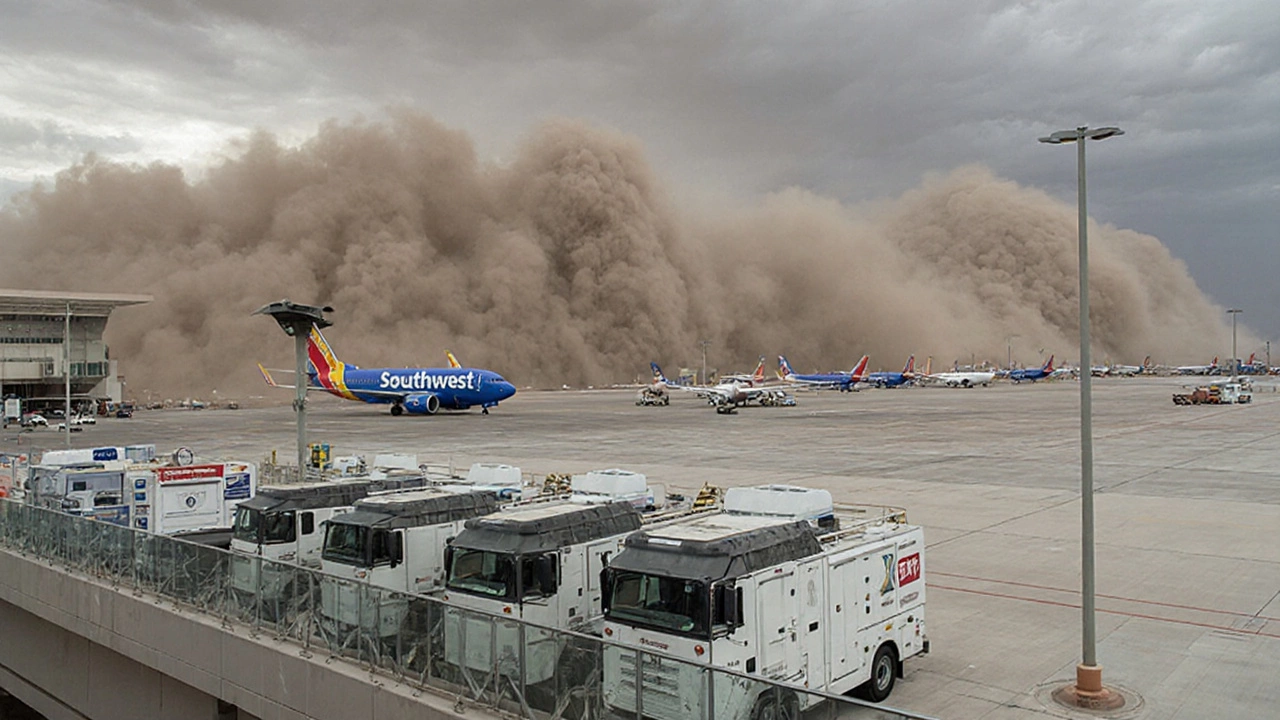
Storm Overview and Immediate Impact
On the evening of Monday, August 25, 2025, a towering haboob rolled into the Phoenix metro area, turning daylight into an ominous, dusty twilight. Radar images showed a wall of sand and grit stretching almost 10,000 feet into the sky, while wind gusts slammed the region at 70 mph. The sudden loss of visibility was enough to halt one of the nation’s busiest hubs – Phoenix Sky Harbor International Airport – for several hours.
Sky Harbor, which handles more than 25 million passengers each year, responded by issuing a temporary ground stop. Flight‑tracking data later confirmed that over 40 aircraft were diverted to alternate fields such as Tucson International, Phoenix‑Mesa, and even Las Vegas McCarran. More than 300 flights suffered delays, and FlightAware reported that roughly one in four scheduled departures was pushed back or cancelled during the storm’s peak.
Among the most eye‑catching diversions was British Airways Flight 289, a nine‑hour transatlantic service from London that had already begun its descent into Phoenix. Pilots circled once, then were cleared for a reroute to Las Vegas – a 250‑mile detour that added several hours to the journey. An Alaska Airlines flight from Portland faced a similar fate, having to abort its approach after spending two and a half hours in the air.
While passengers watched the dust wall close in through airport windows, Terminal 4 sustained unexpected damage. The roof’s outer panels buckled under the force of the wind, allowing rain that followed the dust storm to seep inside. Water pooled on the concourse, flooding seating areas and triggering a cascade of cleanup efforts that stretched into the early hours of Tuesday.
The haboob’s reach extended far beyond the runway. In Arizona City, a mother of two, Bernae Boykin Hitesman, recounted pulling over on a rural road as the dust enveloped her car. “I couldn’t see my hand in front of my face if I put my hand outside,” she said, adding that the grit literally tasted in the air. The storm’s blinding power forced dozens of motorists to stop on highways, creating a ripple of slow‑moving traffic that took hours to clear.
Power outages added another layer of chaos. Utility crews estimated that more than 52,000 homes and businesses lost electricity for several hours. The National Weather Service had already warned two million residents about the impending event, but the speed at which the haboob materialized left little time for preparation. Local hospitals reported a spike in patients with respiratory irritation, coughs, and asthma attacks caused by the fine particulate matter.
Aftermath and Lessons Learned
Airport officials worked through the night to assess and repair the damage. Deputy Aviation Director for Public Relations Heather Shelbrack described teams "identifying leaks, removing standing water, and securing the roof" before sunrise. By early Tuesday, most systems were back online, and the airport began processing the backlog of delayed flights.
The storm also sparked a broader conversation about desert‑region infrastructure resilience. Experts note that haboobs, driven by downdrafts from thunderstorms, can develop in minutes and travel hundreds of miles. “Airports in arid zones need to factor in rapid dust accumulation on runways and aircraft surfaces,” said Dr. Miguel Alvarez, a meteorologist at the University of Arizona. “Regular cleaning protocols and real‑time visibility monitoring are essential to keep operations safe.”
Travelers were urged to double‑check flight status before heading to the airport, as lingering gusts and low clouds continued to affect take‑offs well into Tuesday morning. The forecast called for a 40 % chance of rain later that day, offering a brief reprieve before the desert’s monsoon season fully set in.
In the weeks that followed, Sky Harbor launched a public‑information campaign highlighting how passengers can stay safe during dust events. Tips included keeping windows closed, using air‑conditioned vehicles for travel, and carrying a mask to reduce inhalation of fine particles.
While the haboob left a noticeable mark on Phoenix’s skyline and travel schedule, it also served as a reminder that even modern, high‑traffic airports are vulnerable to natural forces. As climate patterns shift and desert storms become more frequent, the industry will likely see new standards aimed at protecting both passengers and planes from the gritty grip of the next dust‑filled horizon.
Write a comment